Buying a trike in Philadelphia? What the law says, and where you'll actually lock it
How Pennsylvania defines a pedalcycle with electric assist, where a three-wheeled cycle may legally ride in the city, and how to park and insure something no rack will hold.
Common questions
Three wheels still count
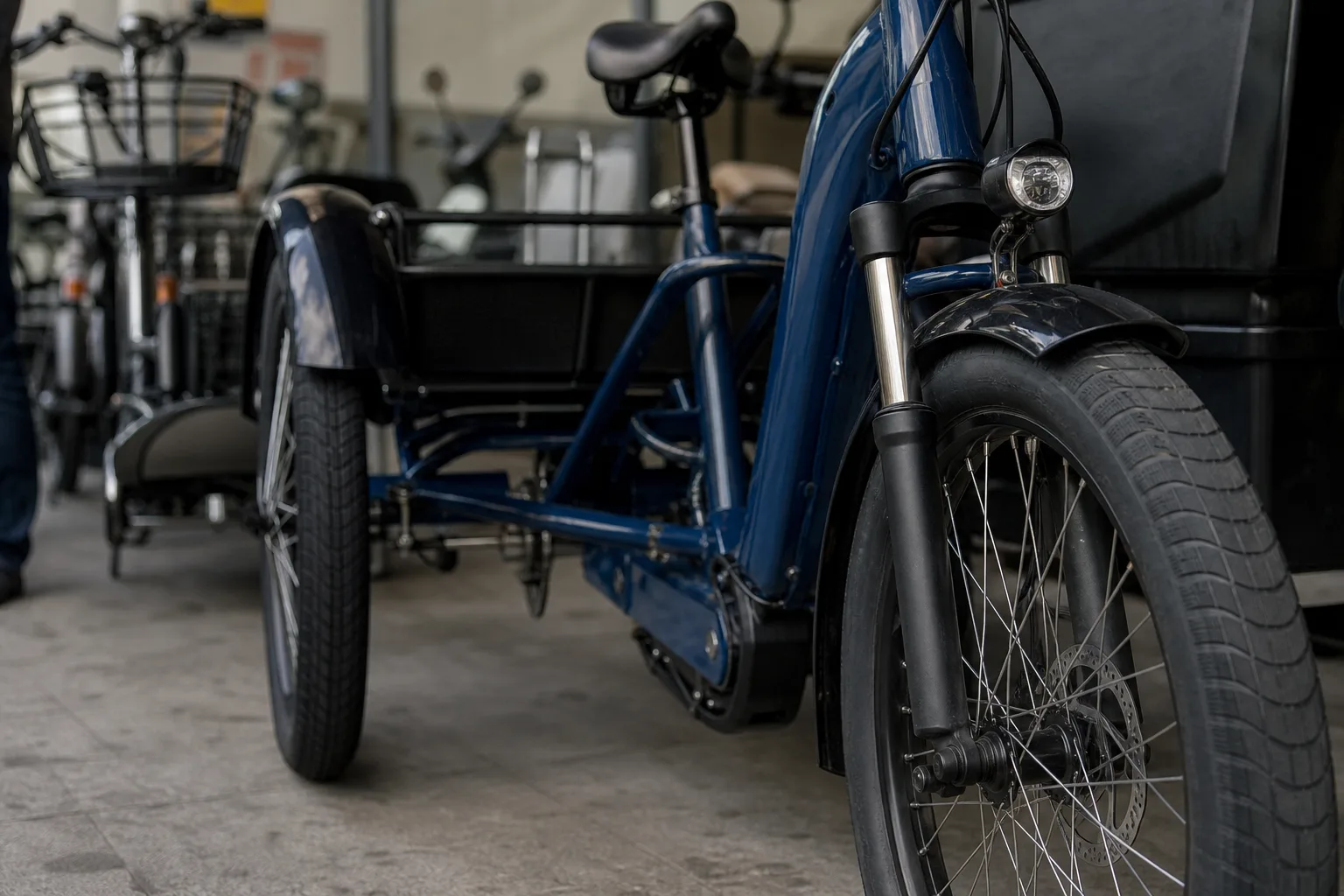
Pennsylvania's definition of a pedalcycle with electric assist explicitly covers machines with two or three wheels. A trike is not a special category under state law as long as it meets the other conditions.
The 100-pound ceiling
Total weight must not exceed 100 pounds for the machine to stay inside the definition. Heavy cargo deltas with a box, fairing and large battery can approach that line before any load is added.
Twenty miles per hour
Motor assistance must cut out at 20 mph on a level surface. Coasting faster downhill is fine; a motor that keeps pushing past that speed is not.
Sixteen-year minimum age
State law sets a minimum operator age of sixteen for a pedalcycle with electric assist. An unassisted trike carries no such restriction.
A three-wheeled cycle sits in an odd spot in Pennsylvania law and an odder one on a Center City sidewalk, and both problems are solvable, but only if you check them before the money leaves your account. The legal questions are narrow and answerable in an afternoon. The parking questions are the ones that quietly decide whether you ride the thing daily or leave it in a basement. What follows is the order a careful buyer works through, from the statutory definition down to the bolt that holds the seat post.
1. Start with the statutory definition, not the marketing copy
Pennsylvania's vehicle code defines a pedalcycle with electric assist, and the definition does the work that a product page will not: two or three wheels, operable pedals, an electric motor under 750 watts, a top motor-assisted speed of 20 miles per hour on a level surface, and a total weight not exceeding 100 pounds. Riders must be at least sixteen. A machine that meets all of those points is treated as a pedalcycle rather than a motor vehicle, which is why the wattage number on the hub matters more than the throttle feel on a test ride.
2. Check the weight limit as carefully as the wattage
Buyers fixate on 750 watts and skip the 100-pound ceiling, which is the clause a loaded cargo trike is most likely to bump against. Heavy steel deltas with a big battery, a rear box, a rack and a fairing can climb toward that line before you have put a bag of groceries in. Ask the seller for the shipping weight and the assembled weight separately, since the two often differ by ten pounds or more of packaging, and confirm whether accessories were counted. A dealer who cannot answer that has not read the manual either.
3. Know where three wheels are welcome and where they are not
Classified as a pedalcycle, a trike may use the roadway and, in Philadelphia, the bike lanes, which is the practical answer for most trips. Sidewalk riding is off the table for adults in the city, and that restriction has more bite on a trike, because the machine is wide enough that people assume it belongs on the pavement. Multi-use trails set their own rules, and some park and river trail managers restrict or condition motor-assisted use, so check the specific trail's posted policy rather than assuming the state definition carries through everywhere.
4. Measure your track width against the infrastructure you use
A tadpole trike running roughly thirty inches across the front axle clears most Philadelphia bike lanes comfortably and struggles at the narrow points: flex-post protected lanes with debris, bollard gaps at trail entrances, and the pinch where a lane squeezes past a bus stop island. Ride your intended commute once on a borrowed machine before you commit. Note every place you have to leave the lane, and decide whether taking the general travel lane at those points is something you are willing to do in traffic.
5. Solve parking before delivery, because no rack will hold it
Standard inverted-U racks are built for a two-wheeler's frame triangle, and a trike's frame sits low and far from the hoop. What works instead is a sign pole or a parking meter post with a chain long enough to reach the frame, a hardened rear-wheel or frame lock mounted permanently to immobilize one wheel, and, for longer stops, removing the seat, the battery and the control display, which are the parts that walk. Quick-release wheels are a liability here. Swap them for bolt-through skewers with a keyed fitting.
6. Ask the insurer exactly what it needs on file
Homeowners and renters policies often cover a pedal cycle as personal property with a sublimit, and a scheduled endorsement raises that limit for a specific machine. Insurers typically want the serial number, the purchase invoice, photographs of the whole trike and the drivetrain, and a written statement of the motor's wattage, since a machine exceeding the pedalcycle definition may be excluded outright. The Consumer Product Safety Commission oversees the federal standard for low-speed electric bicycles, and quoting that classification on the application saves an argument later.
The paperwork takes an evening and the locking habit takes a week to build. Both are cheaper than discovering, after delivery, that the machine you bought cannot be legally ridden where you planned to ride it or safely left where you planned to leave it.
The pedals must actually work and drive the machine. A throttle-only vehicle with decorative pedals falls outside the pedalcycle definition and into motor vehicle territory.